Why Rural Development Hubs?
For generations, many rural communities and Native nations have experienced development approaches that emphasized extracting value from places rather than building long-term local capacity and wealth. While these approaches generated significant economic activity, they often left communities with persistent challenges that no single project or sector can solve alone.
Today, communities are navigating increasingly interconnected opportunities and challenges.
Housing, workforce, healthcare, entrepreneurship, infrastructure, natural resource stewardship, and community well-being are deeply connected, requiring collaboration across organizations, sectors, and jurisdictions.
Many regions already have strong organizations and committed leaders advancing this work. As community priorities become more complex, regions benefit from organizations that can connect partners, align resources, and sustain long-term collaboration.
Rural Development Hubs help communities build a coordinated, place-based approach by strengthening regional relationships, aligning investments, and supporting long-term prosperity.
Through research and ongoing engagement with practitioners, Aspen CSG observed that organizations across the country were already serving this role, despite having different histories, structures, and issue areas.
Rather than prescribing a new organizational model, Aspen CSG identified a recurring pattern of regional leadership and developed the Rural Development Hub model to provide a shared framework for understanding, strengthening, and supporting this important function.
REgional Transformation
What is a Rural Development Hub?
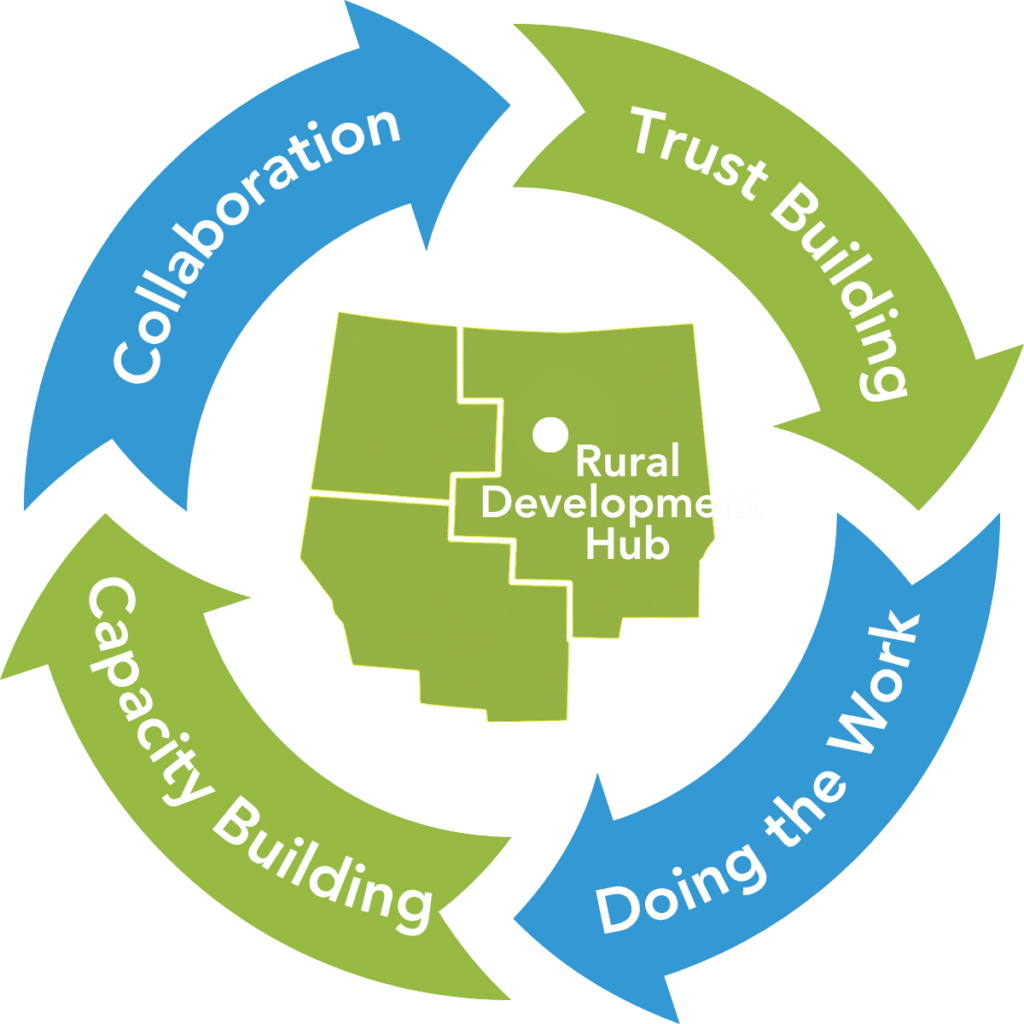
A Rural Development Hub is a place-rooted organization that works across a region to coordinate partners, strengthen local capacity, and connect community priorities with resources and investment. Rural Development Hubs focus on regional-scale planning because many rural challenges and opportunities cross local boundaries.
Rural Development Hubs are not defined by a specific organizational structure, issue area, or program. They may be nonprofits, Tribal organizations, community foundations, local development organizations, educational institutions, or other place-rooted entities.
What distinguishes a Rural Development Hub is the role it plays. Rather than focusing primarily on delivering a single program or service, a Hub helps connect organizations, coordinate regional efforts, and build the long-term relationships and capacity that allow communities to pursue shared goals over time.

Why Regional Coordination Matters
Rural communities and Native nations are tackling opportunities and challenges that extend beyond the mission or capacity of any single organization. Rural Development Hubs help regions coordinate people, partnerships, and resources to address issues like these over the long term.
Rural Development Hubs help regions respond to interconnected opportunities and challenges, including:
| Challenge | How Rural Development Hubs Help |
|---|---|
| Fragmented funding | Align public, philanthropic, and private resources around shared regional priorities. |
| Limited local capacity | Provide coordination, planning support, and leadership development that individual organizations may not be able to sustain alone. |
| Cross-sector challenges | Bring together partners working on housing, workforce, health, entrepreneurship, and other interconnected issues. |
| Short-term funding cycles | Maintain momentum and shared strategy beyond individual grants or projects. |
| Complex systems and policies | Help communities identify barriers, coordinate action, and connect local priorities with larger funding and policy opportunities. |
What Rural Development Hubs Do
There is no single organizational model for a Rural Development Hub. Hubs can be community foundations, CDFIs, economic development organizations, Tribal organizations, nonprofit intermediaries, local and regional governments, and other place-rooted organizations. What unites them is not their organizational type, but the role they play in helping communities coordinate partners, resources, and long-term regional priorities.
The term “Hub” describes the role these organizations play within their regions. Like the hub of a wheel, they help connect people, organizations, resources, and ideas that might otherwise remain disconnected. The term is used as a shared way to describe a function observed across many different organizational types, not as a specific legal or organizational designation.
Convene Partners
Bring local organizations, residents, public agencies, and funders together around shared regional goals.
Build Capacity
Support planning, staffing, leadership, and implementation so communities can act on priorities.
Coordinate Funding
Align public, philanthropic, and private resources across projects and partners.
Connect Communities to Opportunity
Link local priorities with outside investment, technical assistance, and policy opportunities.
Support Long-Term Strategy
Keep work moving beyond individual grants, projects, or leadership changes.
Where Hubs Are Working
Every Rural Development Hub reflects its own place and priorities, and together they illustrate a shared pattern of regional leadership across the country.
This map highlights Rural Development Hubs across the United States and showcases the diverse places and regions where Hub work is underway. It is an evolving resource, not an exhaustive list. We are actively updating the map as we continue to learn about and meet with Hub organizations across the country.
Click on each state to learn more about the Hubs currently featured. If you know of a Hub that should be added, please reach out!
How Rural Development Hubs Differ From Traditional Organizations
| Rural Development Hub | Traditional Organization |
|---|---|
| Works across issues and systems | Focuses on one issue or program |
| Coordinates partners across a region | Serves a specific locality or service area |
| Builds capacity, alignment, and shared strategy | Delivers programs directly |
| Connects sectors such as housing, health, workforce, and economic development | Operates within one sector |
| Sustains long-term regional priorities beyond funding cycles | Organizes work around individual projects or grants |
How Rural Development Hubs Create Change
A Rural Development Hub helps move a region from ideas to action. By bringing together community priorities, local knowledge, and regional partners, Hubs help communities develop shared strategies, align resources, and coordinate investments. While every region’s path is different, this role of connecting people, organizations, and opportunities over time helps create the conditions for stronger economies, healthier communities, and long-term prosperity.
What Does Hub Work Look Like?
Rural Development Hubs work across issues because community priorities are connected. Housing, health, workforce, infrastructure, small business development, and local wealth-building often depend on the same relationships, capacity, and coordinated investment.
Housing
Hubs often connect housing efforts with workforce, childcare, and economic development goals.
Example: Northern Forest Center has supported housing initiatives tied to workforce needs and regional economic development across the Northern Forest region.
Workforce Development
Hubs help align employers, educational institutions, and community partners around regional workforce needs.
Example: Southwest Initiative Foundation participated in regional welcoming and belonging work designed to strengthen workforce attraction and retention across rural communities.
Childcare
Hubs often treat childcare as essential economic infrastructure rather than a standalone issue.
Example: Greater Watertown Community Health Foundation helped expand access to childcare while connecting that work to broader community and economic development priorities.
Health and Well-Being
Hubs connect health outcomes with housing, economic opportunity, social connection, and local services.
Example: Imperial Valley Wellness Foundation works across sectors to advance community health, economic mobility, and regional well-being.
Entrepreneurship and Local Wealth
Hubs help communities build and retain wealth by strengthening local businesses, ownership, and value chains.
Example: PA Wilds Center for Entrepreneurship supports entrepreneurship, outdoor recreation businesses, and local wealth-building across a multi-county region.
Infrastructure and Energy
Hubs help communities navigate complex infrastructure investments and align them with local priorities.
Example: Aspen CSG’s Making Broadband Work for Rural Communities and Native Nations highlights how regional organizations helped connect broadband investments with long-term community development goals.
Rural Development Hubs in Action
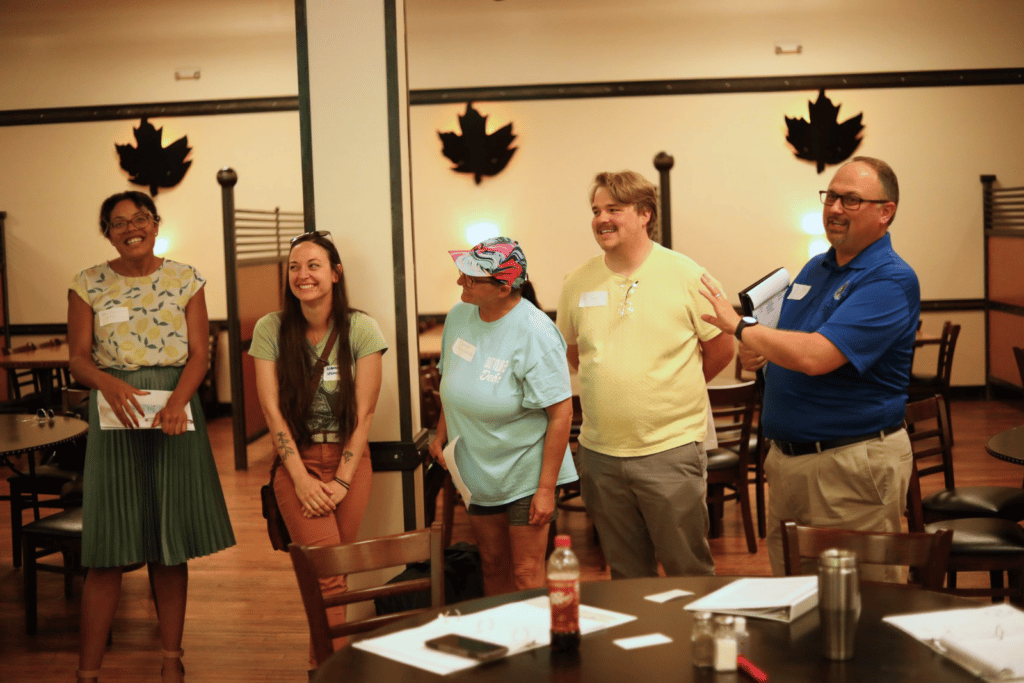
Communicating to Connect: Moving Beyond Neutrality
This short case study has insights and tips to move beyond neutrality and still communicate effectively across the political spectrum.

Using Relational Leadership to Build Power Together
This short case study has insights and tips on how communities that have been historically and systematically excluded can develop authentic and effective leadership that builds power to challenge the status quo.

Turning Federal Opportunities into Local Resources
This short case study has insights and tips on how rural communities with limited staffing and resources can understand, prepare for, and compete for finite federal funds.
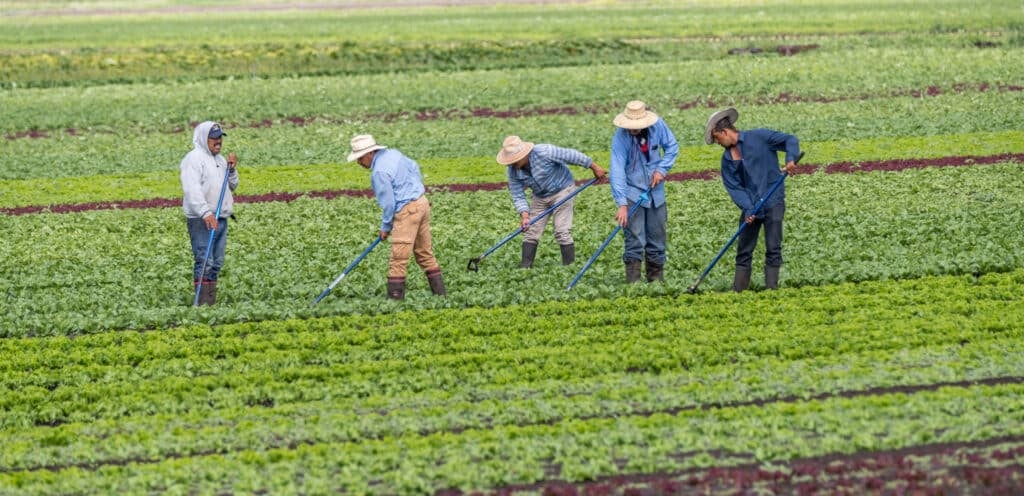
Student Leadership and Action with Farmworkers
This short case study has insights and suggestions for how rural-serving organizations can effectively welcome and truly empower leaders from all backgrounds.

Stacy Caldwell on Representing Rural Interests in Tahoe-Truckee
A Q&A with Stacy Caldwell, CEO of the Tahoe Truckee Community Foundation, who is reshaping what rural leadership looks like in California’s North Tahoe-Truckee region.

Building Funder Capacity to Support Communities
This short case study has insights and tips on how funders are shifting gears to learn communities’ processes and practices, enabling more equitable partnerships and impactful projects that meet community needs.

Addressing Climate Change and Community Worth
Insights on how funders can support rural and Native communities in mitigating extreme weather disasters.

Q&A with MDC’s Brandy Bynum Dawson
MDC’s Brandy Bynum Dawson shares insights on her work, her home, and the deep connection between the two.

Three Principles for Rural Health and Prosperity
Rural America’s health equity is inseparable from its economic well-being, and aligning these two crucial fields is essential for achieving true rural prosperity.

Rural Community Colleges are Uniquely Positioned to Tackle Regional Challenges and Drive Transformation
As trusted pillars of the community, rural community colleges can address local challenges in unique ways.
Voices from the Field
Rural Development Hub leaders describe what makes the model effective and how coordination strengthens trust, how long-term planning supports resilience, and how community-led decision-making shapes development outcomes.


“You cannot develop the economy without also developing community and civic institutions.”
Rob Riley, Northern Forest Center, New Hampshire

“If Hubs don’t have resources, they can’t deliver for anyone else. They need real investment—funding, training, peer learning, and technical support—to do this work well.”
Jennie Stephens, Center for Heirs Property Preservation, South Carolina

“As both a funder and a Rural Development Hub, our investment is ultimately in people, relationships, and infrastructure, because that is what makes lasting community change possible.”
Roque Barros, Imperial Valley Wellness Foundation, California
Indigenous and Place-Grounded Approaches
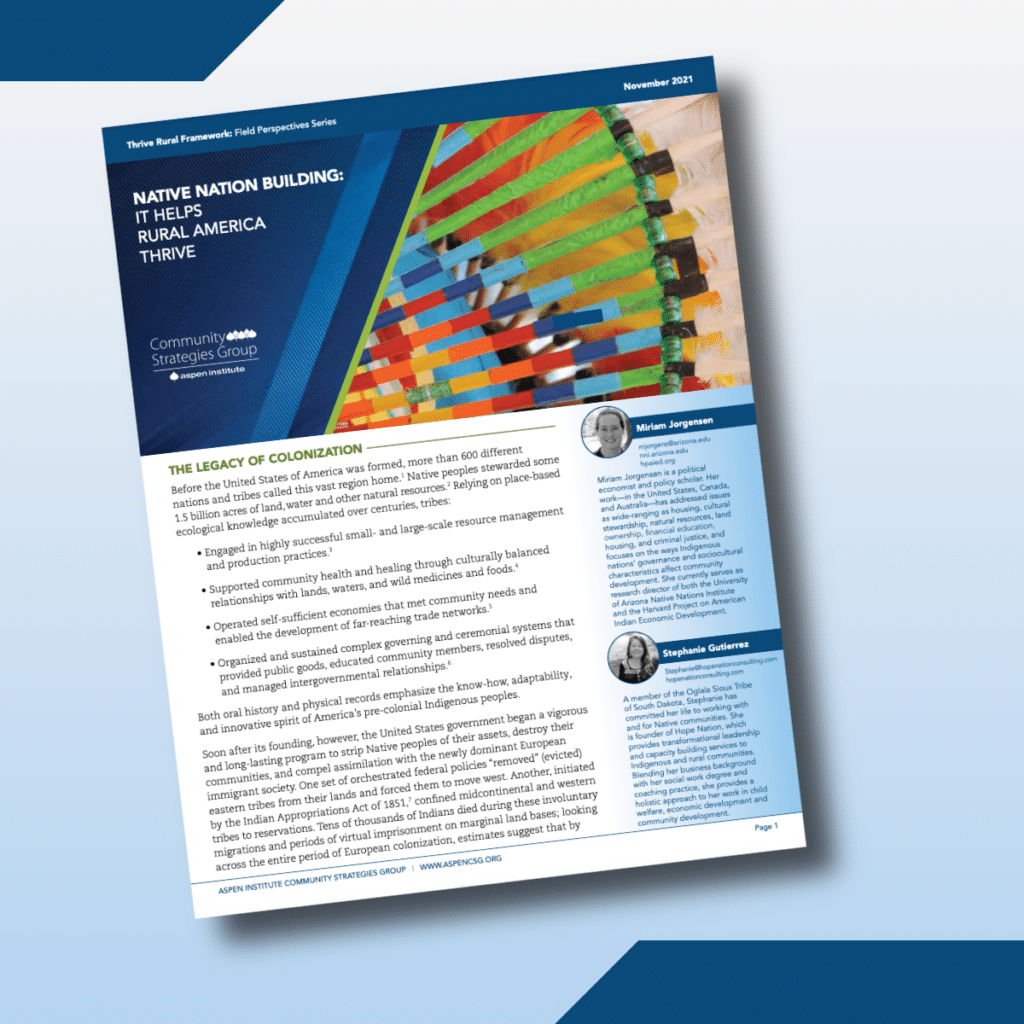
Rural Development Hubs led by Indigenous leaders or that share geography with Native nations operate within a distinct context shaped by sovereignty, treaty rights, and self-determination. Their work is grounded in Tribal governance structures and informed by a responsibility to address historical and ongoing harms to Indigenous land, culture, and community well-being.
These Hubs often center development approaches that reflect Indigenous worldviews, including relationships to land and water, intergenerational responsibility, and collective decision-making. As a result, strategies, timelines, and measures of success may differ from those used elsewhere, with greater emphasis on cultural continuity, trust-building, and accountability to Tribal citizens.
Aspen CSG continues to learn from Indigenous leaders, practitioners, and partners to better understand how Rural Development Hubs develop and operate in Tribal contexts. Ongoing research is exploring how Tribal governance, regional partnerships, place-based funding, and Indigenous approaches to community development influence Hub formation, long-term collaboration, and community well-being. This work is helping refine and strengthen the Rural Development Hub model while recognizing that there is no single approach across Native nations and Indigenous communities.
Aspen Institute Community Strategies Group’s Role
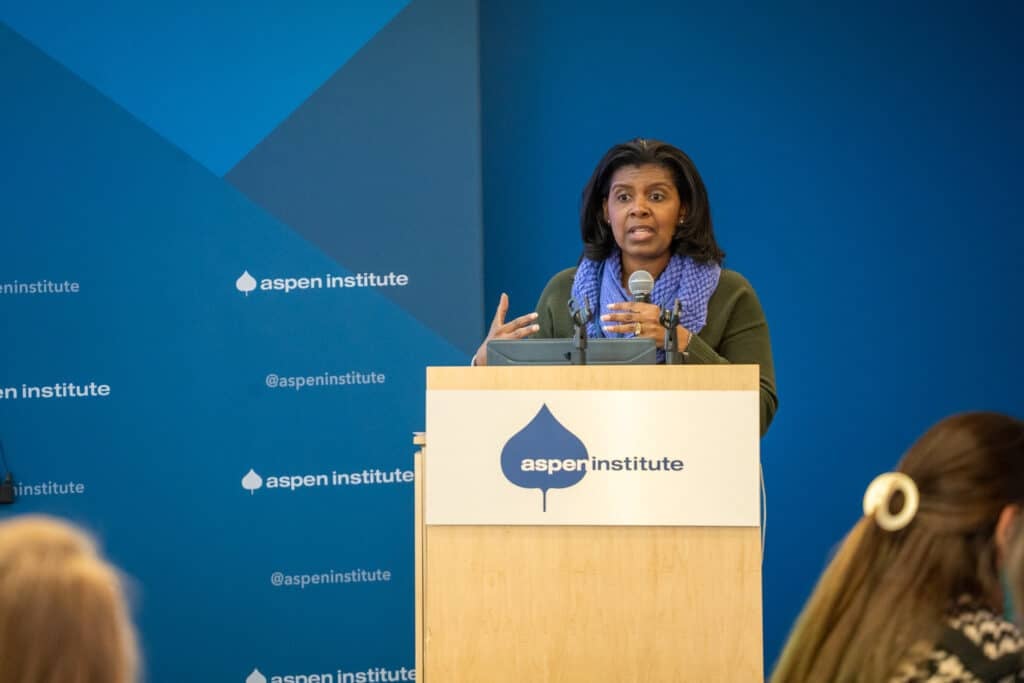
Aspen CSG developed and published the Rural Development Hub model in 2019 following a national study of rural and Indigenous organizations. The research identified a consistent pattern of organizations playing similar regional roles across diverse geographies and contexts. Naming the model provided shared language for practitioners, funders, and policymakers and established a foundation for continued learning and field development.
Today, Aspen CSG serves as the developer, national convener, and steward of the Rural Development Hub model. We conduct research, document emerging practices, convene peer learning, and work alongside practitioners to strengthen and refine the model over time. By connecting lessons across regions, Aspen CSG supports a growing community of practice and advances understanding of the role Rural Development Hubs play in long-term community and economic development.
Aspen CSG also partners with organizations such as Trust for Civic Life and Resource Rural to apply and adapt the Hub model across diverse rural and Indigenous contexts. These partnerships help strengthen practice, inform investment strategies, and expand support for place-rooted organizations advancing regional prosperity and well-being.
Timeline of Aspen CSG’s Work
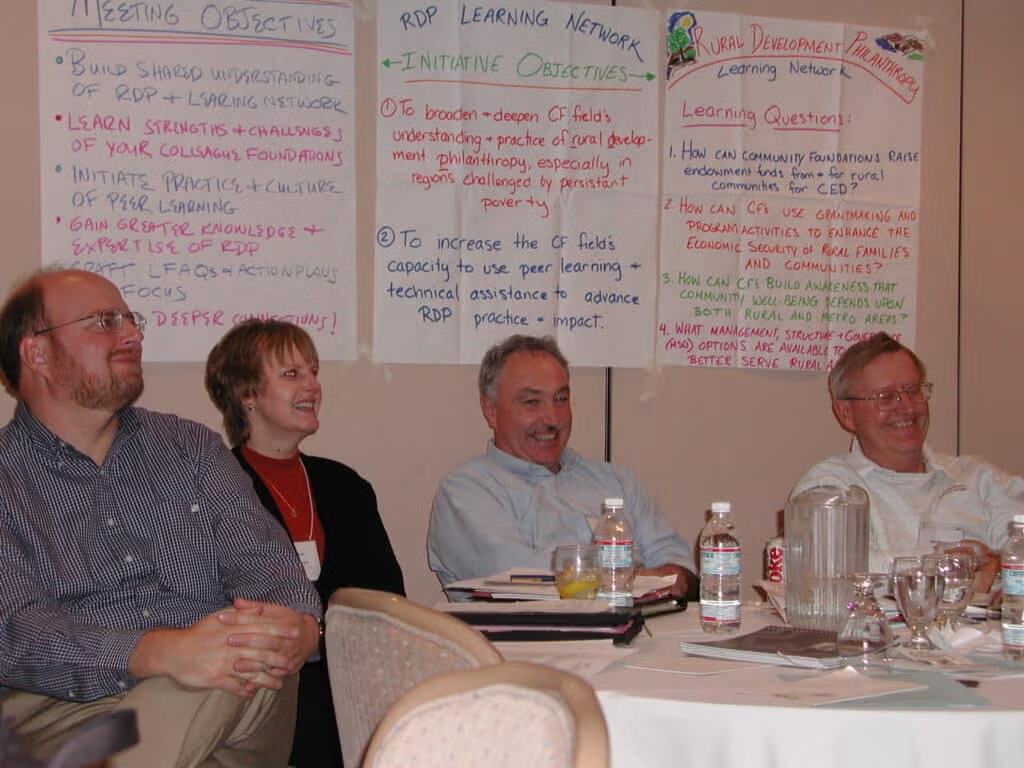
1985
Aspen CSG is founded to address the lack of rigorous research on poverty in rural America. It’s one of the longest-standing policy programs at the Aspen Institute.
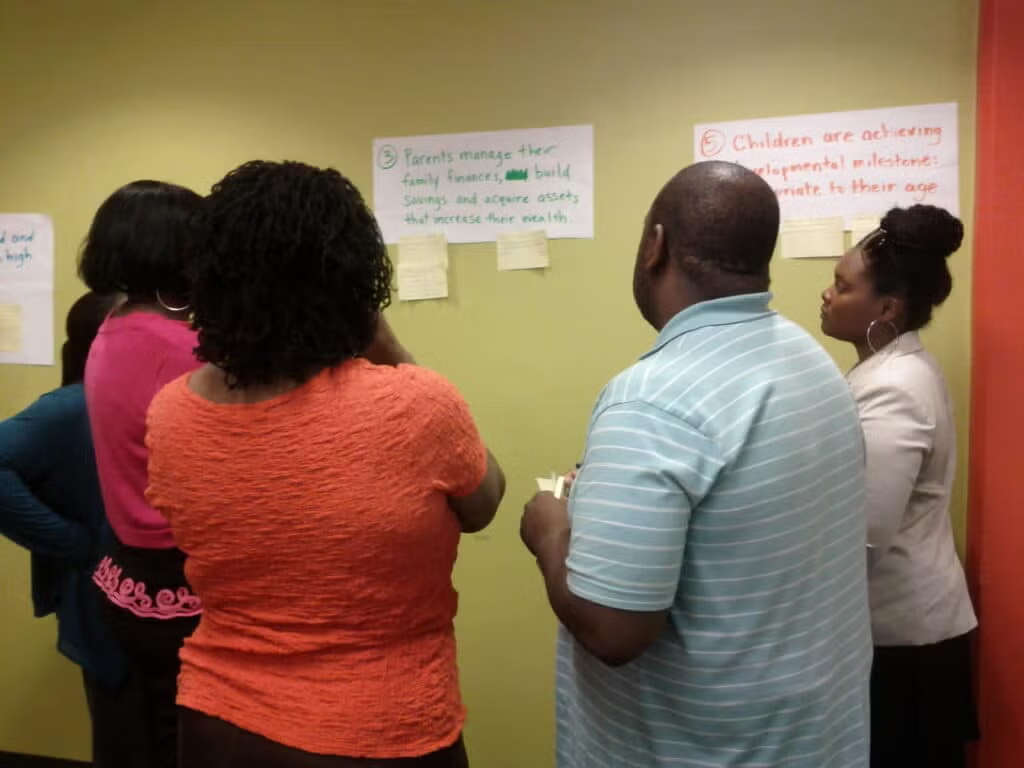
1990-2000s
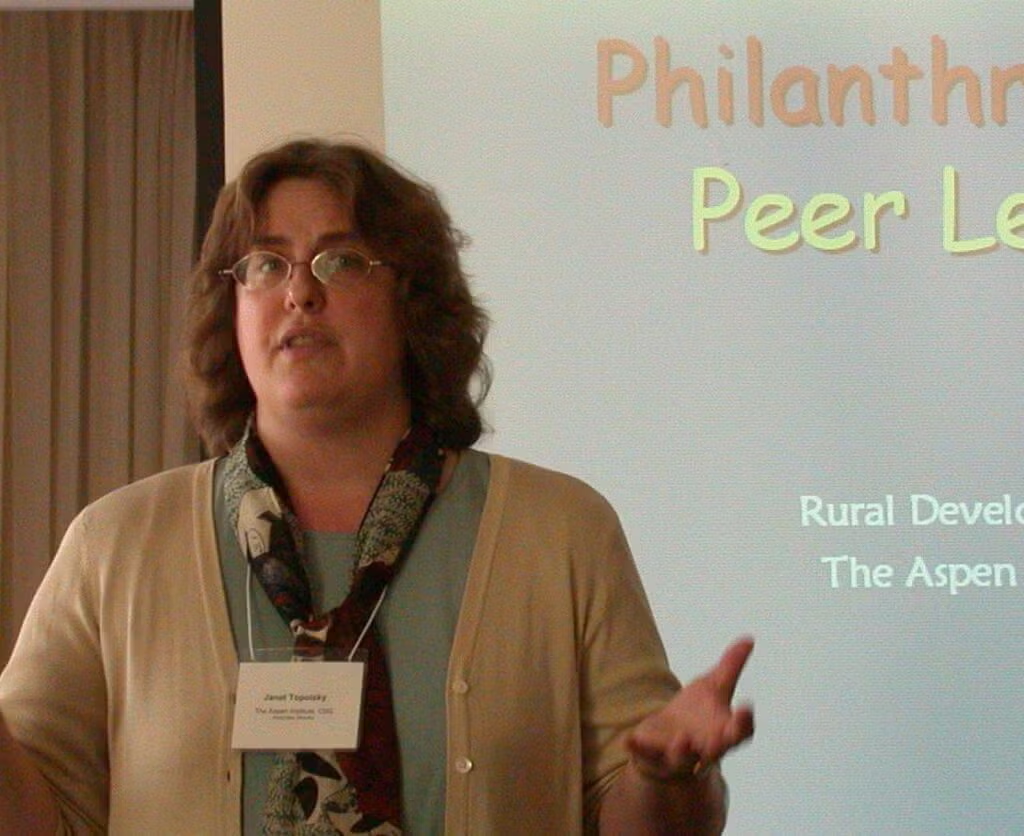
Aspen CSG begins connecting rural practitioners across geographies, sectors, and ideologies. This practice became the foundation of our peer learning cohorts.
2010s
Key partnerships—with the Annie E. Casey Foundation, Ford Foundation, and CFLeads—enable the testing and scaling of peer-learning efforts.
2019
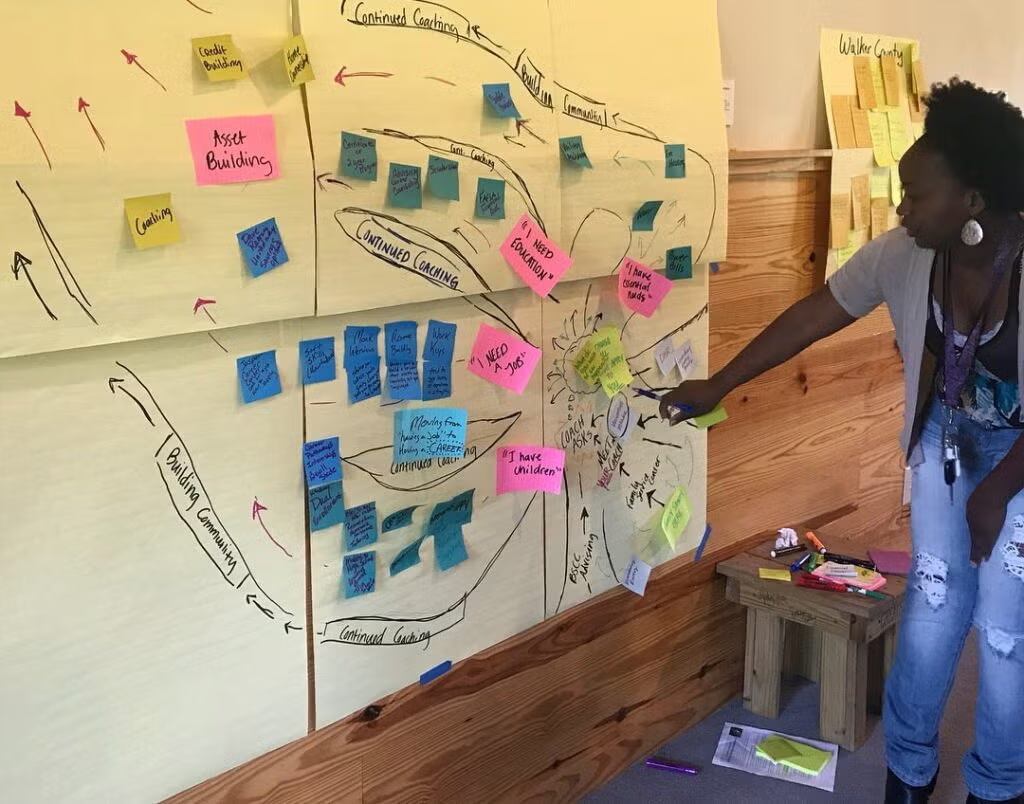
Supported by RWJF, Rural Development Hub model identified, defined, and published, giving existing Hubs a shared language and confidence in the model.
2020-2025
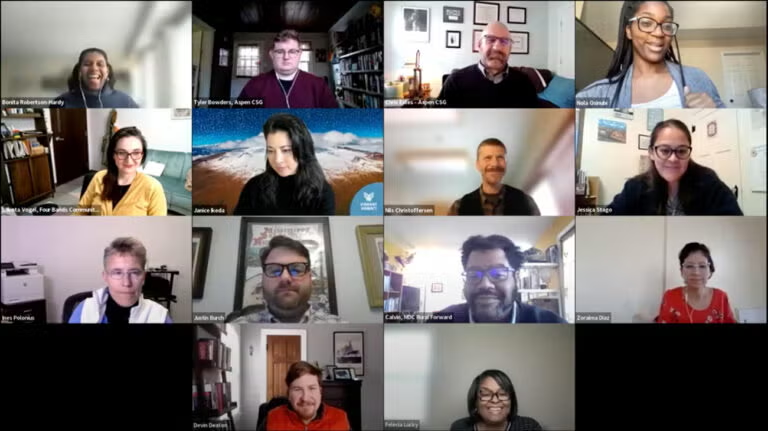
Aspen CSG organizes virtual convenings that facilitate learning and research to refine the model.
2025
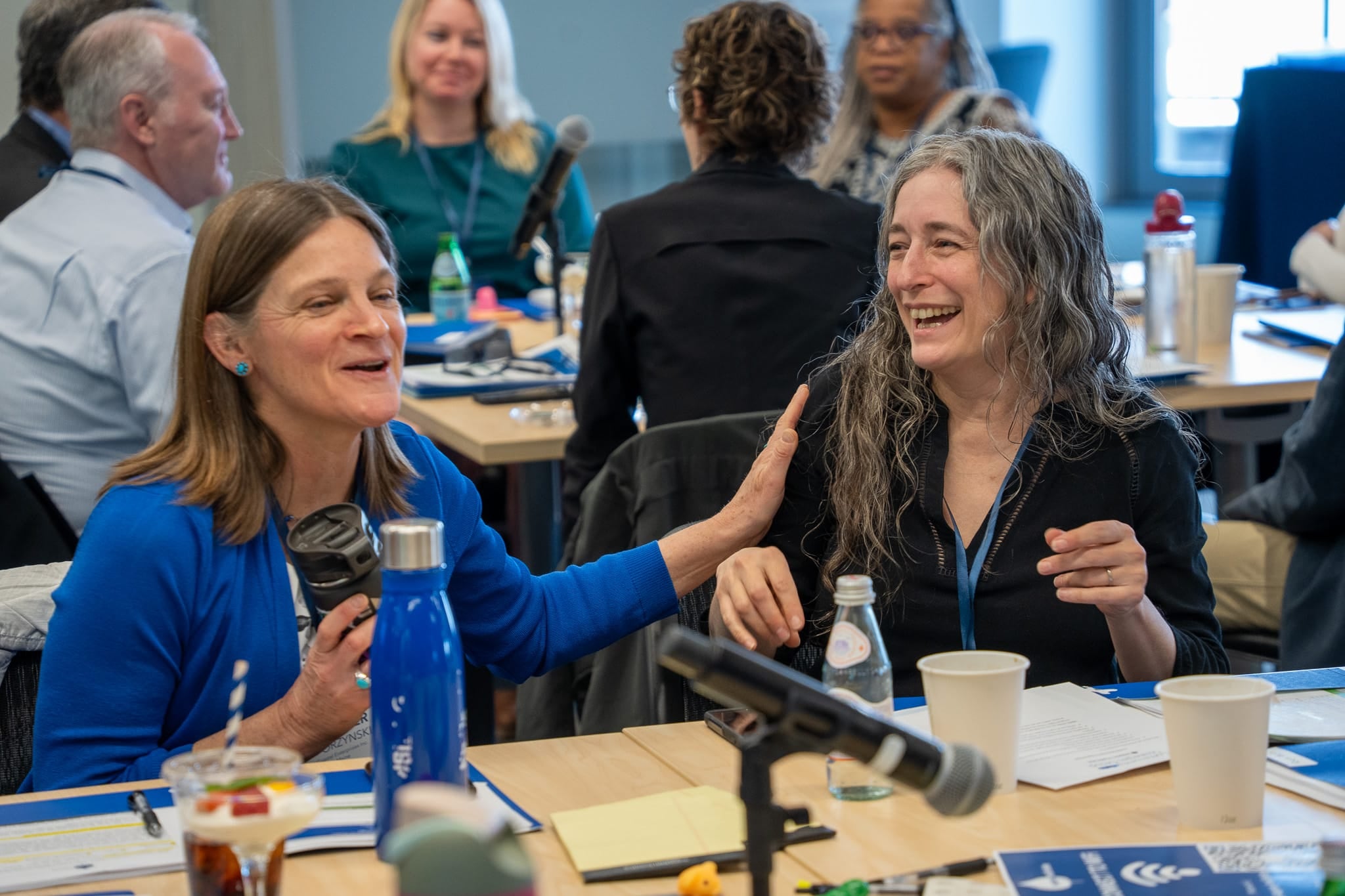
Aspen CSG hosts a Rural Development Hub Learning Summit and publishes a case study with practitioner insights.
2026
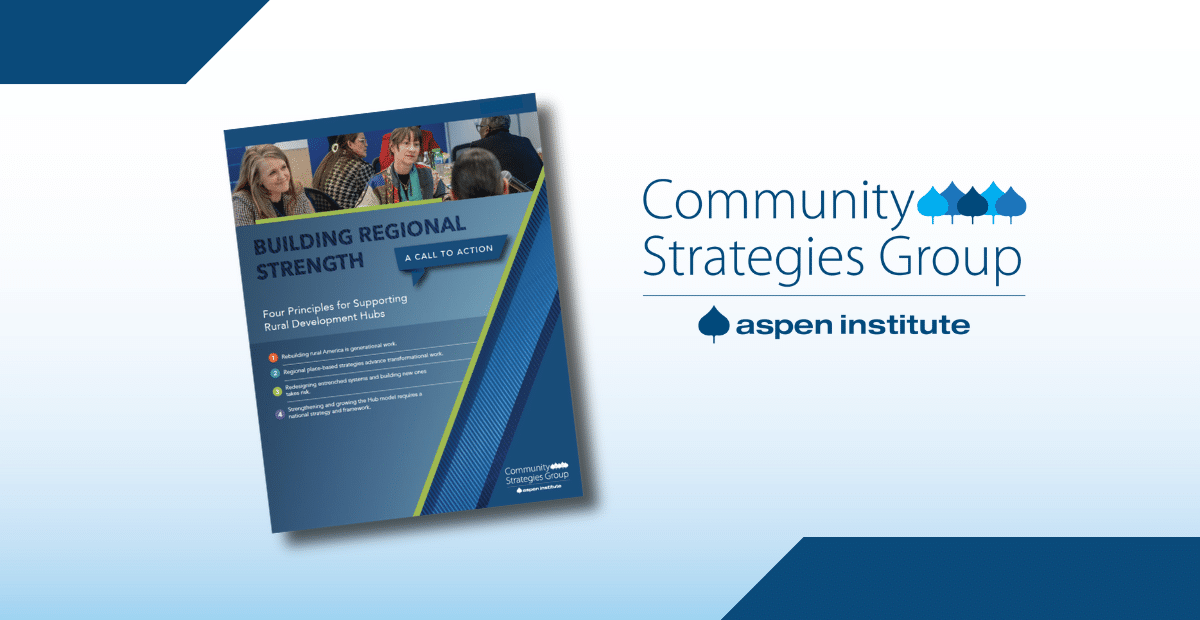
An updated Rural Development Hub report is published with expanded case studies and refined guidance.
Can My Organization Be a Rural Development Hub?
There is no formal designation or certification for Rural Development Hubs. The model is intended to describe a set of roles and functions that can be carried out by many different types of organizations.
Organizations that operate as Rural Development Hubs often:
- Work across multiple issues such as housing, workforce, health, entrepreneurship, or infrastructure.
- Convene partners around shared regional priorities and long-term goals.
- Connect local knowledge with funding, investment, and technical assistance opportunities.
- Support collaboration and capacity-building across a region.
- Focus on long-term community and economic development rather than a single program or project.
Rural Development Hubs can take many forms, including community foundations, CDFIs, economic development organizations, Tribal organizations, nonprofit intermediaries, local and regional governments, and other place-rooted organizations. As Aspen CSG continues to learn from practitioners and refine the model, we are gathering information from organizations supporting rural regions and Native nations across the country.
Think your organization may be doing Hub work? We’d like to hear from you.
Frequently Asked Questions
Understanding Rural Development Hubs
A Rural Development Hub is a place-rooted organization that works across a region to align partners, build community capacity, and support long-term development grounded in local knowledge. Aspen CSG identified and named the model through a national study of rural and Indigenous organizations that revealed a consistent pattern of organizations playing similar regional roles.
The term “hub” is used in many fields, which is why Aspen CSG uses the full name, Rural Development Hub. Through national research, we found organizations serving as connectors, coordinators, and long-term regional partners across diverse rural and Indigenous communities. “Hub” emerged as a useful way to describe that role while emphasizing relationships, coordination, and regional impact.
No. Many fields use the word “hub” to describe a physical space, service center, or collaboration. Aspen CSG uses the term Rural Development Hub in a specific way. It refers to a place-rooted organization that coordinates partners across a rural region or Native nation, aligns resources, and helps communities pursue long-term, locally driven development strategies. The model emphasizes regional capacity, relationships, and systems change rather than a building, program, or single service.
The number continues to evolve as organizations adopt Hub functions and new examples emerge. Aspen CSG continues to identify, study, and learn from organizations across the country. Our map reflects organizations Aspen CSG has currently identified through its research and field engagement.
Many organizations contribute to rural development, but Rural Development Hubs are distinguished by the role they play across a region. Rather than focusing on a single issue, program, or community, Hubs help connect partners, align resources, and support long-term strategies that address multiple priorities simultaneously. While many organizations may carry out some of these functions, Hubs serve as a coordinating backbone that helps regions move from individual projects to broader, long-term change.
Many Rural Development Hubs have particular strengths or areas of focus. What distinguishes a Hub is not the number of issues it addresses but its ability to connect partners, resources, and strategies across a region to support long-term community priorities.
Applying the Model
There is no perfect time to start. Whether your region is launching a new initiative, strengthening existing partnerships, or exploring what’s possible, the Rural Development Hub model can help. It is designed to help communities ask better questions, understand regional capacity, identify opportunities, and inform long-term development efforts at any stage of the work.
The Thrive Rural Framework and the Rural Development Hub model are complementary tools that support long-term rural and regional development. The Thrive Rural Framework helps communities understand the conditions that contribute to long-term prosperity. It encourages communities to ask better questions, explore local strengths and opportunities, and identify where they want to focus their efforts. Rural Development Hubs help organize the people, partnerships, and capacity needed to advance those priorities over time. They bring together partners, align resources, coordinate action, and help regions adapt as opportunities and challenges evolve. In simple terms, the Framework helps communities understand what supports thriving places. Rural Development Hubs help regions organize how that work happens.
Hubs often sustain their work through a combination of public funding, philanthropy, earned revenue, and regional partnerships. Many also play a role in coordinating resources across organizations and funding streams to support long-term priorities.
Hubs help funders and policymakers connect investments with local priorities, improve coordination across programs and sectors, and strengthen the capacity needed to implement long-term community and economic development strategies.

Is My Organization a Hub?
A Rural Development Hub is not defined by its legal structure or by a specific sector. Hubs can be nonprofit organizations, Tribal entities, public or quasi-public organizations, or collaborative entities housed within larger institutions. Hub status describes how an organization operates in practice, rather than a formal designation.
No. Rural Development Hub is not a certification, membership program, or formal designation. The term describes a role that organizations may play within a region. Aspen CSG continues to study and document how different organizations carry out that role across diverse contexts.
Organizations interested in implementing the model can start by reviewing Aspen CSG’s Rural Development Hub publications and considering how the model aligns with their mission, partnerships, and regional role. Aspen CSG also encourages organizations to connect with other Hub leaders and engage with our ongoing learning opportunities, research, and events.
Yes. Aspen CSG’s research suggests that many Hub functions are present in Native nations and Indigenous communities, but Tribal governance, sovereignty, culture, and history shape how they operate. Aspen CSG is continuing to research how the Hub model applies in these contexts and how it can best reflect Indigenous approaches to community and economic development.
Aspen CSG’s Role
Aspen CSG developed the Rural Development Hub model after observing a consistent pattern of organizations helping rural regions and Native nations coordinate partners, build capacity, and pursue long-term development goals. A national study published in 2019 documented these organizations and provided a shared framework for understanding their role. Aspen CSG continues to research, refine, and strengthen the model through ongoing engagement with practitioners and partners across the country.
Aspen CSG identifies Hubs through research, practitioner recommendations, field engagement, and ongoing learning with rural and Indigenous organizations. The map reflects organizations Aspen CSG has identified through this process and does not represent a formal designation or exhaustive list.
Aspen CSG continues to research, convene, and strengthen the Rural Development Hub field because these organizations play a critical role in helping rural regions and Native nations coordinate resources, build local capacity, and pursue long-term prosperity. As interest in the model grows, Aspen CSG remains committed to documenting lessons from the field and supporting peer learning across regions.
Explore the resources on this page, including research, examples, the interactive map, and the Thrive Rural Framework. You can also browse Aspen CSG’s publications to learn more about Rural Development Hubs and regional rural development. We also recommend subscribing to our newsletter.
Stay Connected
Sign up for updates on Rural Development Hubs, new research, and national peer learning opportunities.
Use the contact form for general questions or media inquiries.