Mapping a New Terrain: Executive Summary

View this Publication

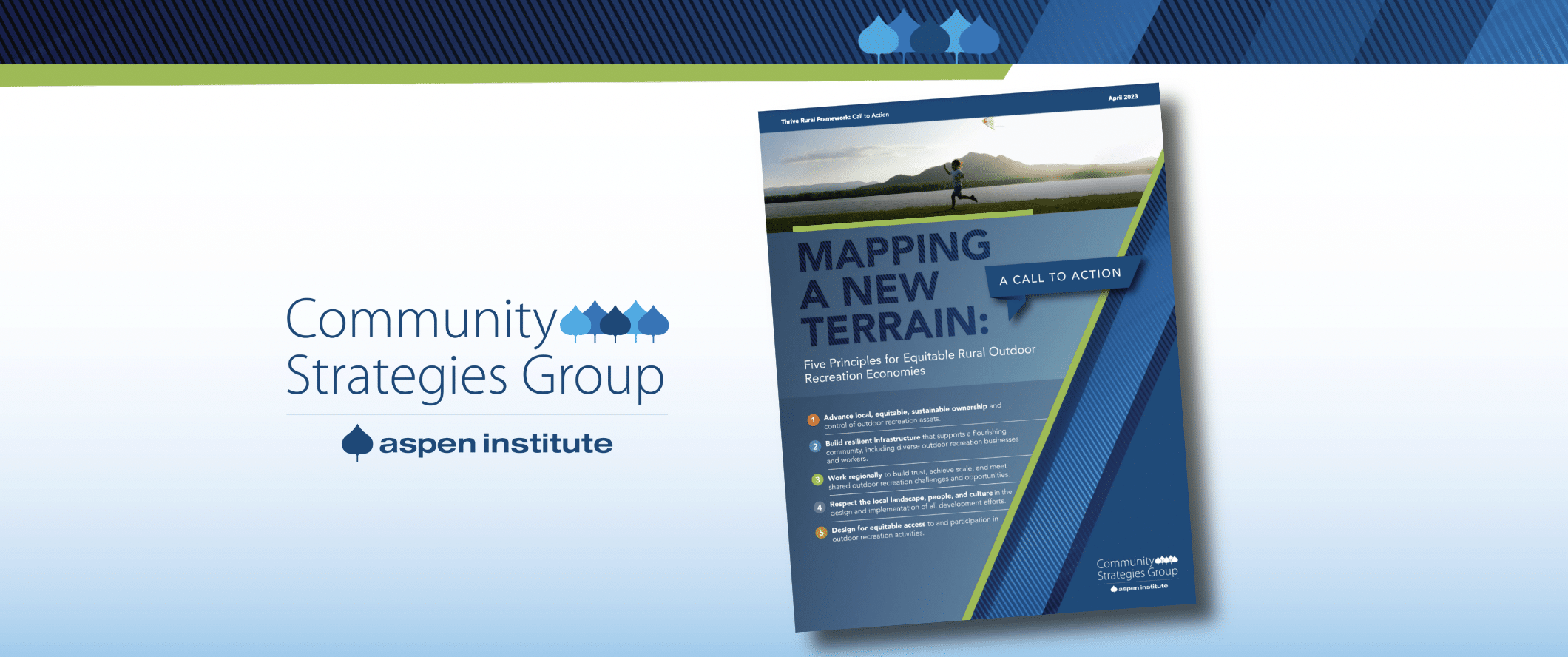
Executive Summary document for Mapping a New Terrain: A Call to Action. Get quick takeaways and recommendations for action.


Encouraged by federal programs and philanthropic initiatives, many rural and Native nation communities are turning to outdoor recreation as a primary economic strategy. However, the tourism sector has a history of inequitable outcomes and can put unsustainable pressure on local systems and resources.

As new rural outdoor recreation economies take root, we can meet this moment by improving how we do outdoor recreation development to better support rural families, businesses, and workers, create more sustainable and equitable economic systems, and improve local health and wellbeing.

We recently convened 27 rural economic and community development practitioners from a diverse range of communities to inform Mapping a New Terrain: A Call to Action

Through this process, we’ve identified five principles to improve health and economic outcomes for rural communities and Native nations — as well as actionable steps to achieve these principles. 

  1. Advance local, equitable, sustainable ownership and control of outdoor recreation assets.
  2. Build resilient infrastructure that supports a flourishing community, including diverse outdoor recreation businesses and workers.
  3. Work regionally to build trust, achieve scale, and meet shared outdoor recreation challenges and opportunities.
  4. Respect the local landscape, people, and culture in the design and implementation of all development efforts.
  5. Design for equitable access to and participation in outdoor recreation activities.

Outdoor recreation development done equitably builds a sustainable economic strategy based on local and regional natural assets like forests, riverways, seashores, mountains, and more and connects those assets into value chains that grow local business ownership and high-quality jobs.

Aspen Institute Community Strategies Group
Latest From Aspen CSG
Blog
Green landscape with icons and designs over it
Building Capacity in Rural & Indigenous Communities

Insights and learnings from rural practitioners on how organizational capacity and technical assistance can be carefully and intentionally strengthened to grow economies, health, and livelihoods for each and every person in their regions.

Blog
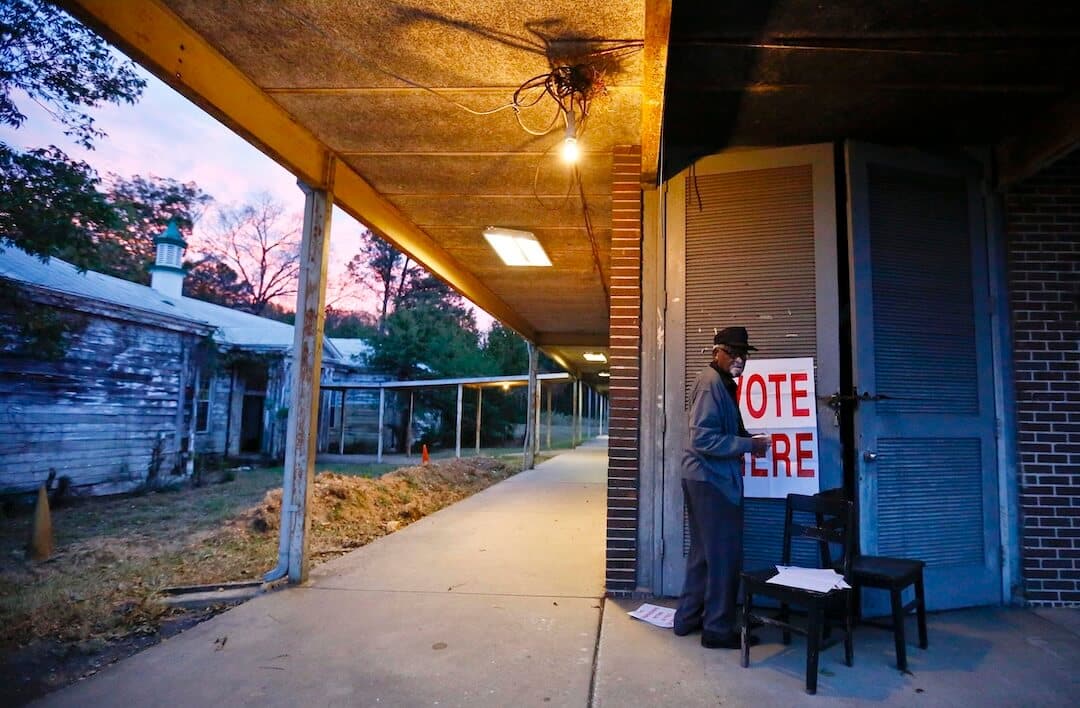
Volunteer places a 'Vote Here' sign outside a rural community center before polls open.
A Reminder To Reporters: If You’ve Seen One Rural Place … You’ve Seen One Rural Place

By shaping accurate narratives, we can drive fair and just investments and policies that honor the people and places at the heart of rural and Indigenous communities.

Tool
Measuring community capacity building book cover
Measuring Community Capacity Building Workbook

This is a workbook focuses on improving the ability of individuals, organizations, businesses, and government in their community to come together, learn, make well-reasoned decisions about the community’s present and future, and work together to carry out those decisions.

Blog
Ten Books for Rethinking Rural and Indigenous Development

Stories shape how we understand people and places. This list highlights narratives and research on the systemic forces affecting rural and Indigenous communities.

Blog
How Rural Development Hubs Can Strengthen Rural Health Transformation Program Implementation

Rural Development Hub leaders say new funding like RHTP works best when regions interpret it against existing priorities, coordinate it through existing partnerships, and adapt it to local context — rather than treating it as a distinct program.

Blog
Ten Podcasts Focused on Rural Community and Economic Development

Check out our roundup of podcasts highlighting important issues about and to rural communities and Native nations.