
What is Rural Stakeholder Equity?
Rural stakeholder equity means creating balanced, mutually beneficial relationships between rural communities and the governments, businesses, and institutions that engage with them. For true equity to exist, rural stakeholders must have an active role in shaping decisions that affect their land, livelihoods, and long-term prosperity.
Professionals working with rural governments, authorities, and nonprofits can help ensure that inclusive governance, local ownership, and community equity remain at the center of rural development. When rural stakeholders are meaningfully included, communities are more resilient, sustainable, and capable of driving their own growth.
Who Are Rural Stakeholders and Why do They Matter?
Rural stakeholders include a wide range of people and organizations who depend on rural economies and ecosystems, such as:
- Local residents and small business owners
- Farmers, landowners, and tribal communities
- Local governments, nonprofits, and cooperatives
- Regional institutions and development authorities
Each stakeholder contributes unique knowledge and resources. Recognizing and aligning these diverse perspectives is vital for inclusive governance and sustainable rural development. When all voices are included, communities are more capable of managing resources responsibly, attracting equitable investment, and building long-term prosperity.
Principles for Advancing Rural Stakeholder Equity
Creating true equity among rural stakeholders requires a sustained commitment to inclusion, transparency, and local leadership. Key principles include:
- Inclusive governance that brings all affected groups into planning and policy discussions
- Local ownership of assets and enterprises that ensures benefits remain in the community
- Stakeholder alignment through shared values, goals, and accountability structures
- Equitable agreements that reflect community priorities and fair distribution of benefits
- Ongoing dialogue to build trust and maintain collaboration over time
Advancing Equity in Rural Development
Professionals working with rural governments, nonprofits, and institutions can advance rural stakeholder equity by centering community participation and local ownership in every stage of development.
When rural people have an active role in shaping decisions, they build stronger local economies, protect their natural assets, and create futures rooted in fairness and shared prosperity.
BUILDING BLOCK EVIDENCE
Evidence suggests the Rural Stakeholder Equity building block is important because inclusive governance and ownership supports more socially desirable outcomes and a greater likelihood of commitments that benefit local communities.1 Recent research on multi-stakeholder and community benefits agreements recommends paying attention to existing power structures underlying agreements,2 among documented best practices.3 For example, among Indigenous communities, community-led impact assessments, regional political organizing, and recognition of legal rights can shift power to communities in negotiations.4
Efforts to increase corporate accountability include the Triple Bottom Line, focusing on people, planet, and prosperity, via an “accounting framework that incorporates three dimensions of performance: social, environmental and financial”.5 Certified B Corporations, for example, are “legally required to consider the impact of their decisions on their workers, customers, suppliers, community, and the environment,” and are among models for corporate social responsibility.6 Local hiring requirements can also support these goals, such as proposed “Community Pillar” standards, like holding large businesses to standards such as an “annual obligation to deploy at least 1 percent of company profits toward bettering their local employment footprint”.7
Models that can retain local equity as outcomes include local ownership and regional development programs focused on equitable rural wealth creation, with local values informing indicators for measurement and evaluation. Experts suggest using local values to inform which indicators to use for evaluation, noting a Tribal community may wish to “emphasize measures of cultural wealth and continuity”.8 Rural development hub models are among these models and designed to include people, places, and firms that have been historically marginalized in the development action and the benefits.9 Examples of regional development programs include the Reclaiming Appalachia Coalition, founded in 2016, The Reclaiming Appalachia Coalition is a regional collaboration that seeks to spur mine reclamation projects throughout Central Appalachia that are responsive to community needs and interests and accelerate the growth of new, sustainable sectors.10
The tension between private, public, and community-held lands and who has decision-making power are also relevant in tourism and ecotourism. While evidence suggests that some forms of tourism can contribute to land conservation and the well-being of local community members, often the power is maintained and benefits accrued to entities outside of the local community and risks and harm accrued to the local community.11 Examples include: tourist fishers depleting resources of local stock, commodification of local cultures in ways that reinforce stereotypes, displacement of local community for the creation of conservation areas, or due to increased real estate values driven by tourists.11 Community-based tourism provides an alternative.
Other research highlights the role of capital in rural areas. Experts have historically suggested “alternative, nontraditional venture capital programs and policy alternatives to promote the availability of equity capital in rural areas”.12 Field literature also suggests that Rural Business Investment Companies (RBICs) programs could be expanded. RBICs are “double bottom-line” companies, seeking investments that will benefit rural communities and provide good returns on investment. This model has “some similarity to traditional venture capital funds” but requires 75% or more of funds to be made in rural areas with a population of 50,000 or less.13
Curated Resources for Rural Stakeholder Equity

Learnings on Rural Migration and Displacement
Insights for community leaders to balance rural migration, retain longtime residents, and develop more equitable local economies.
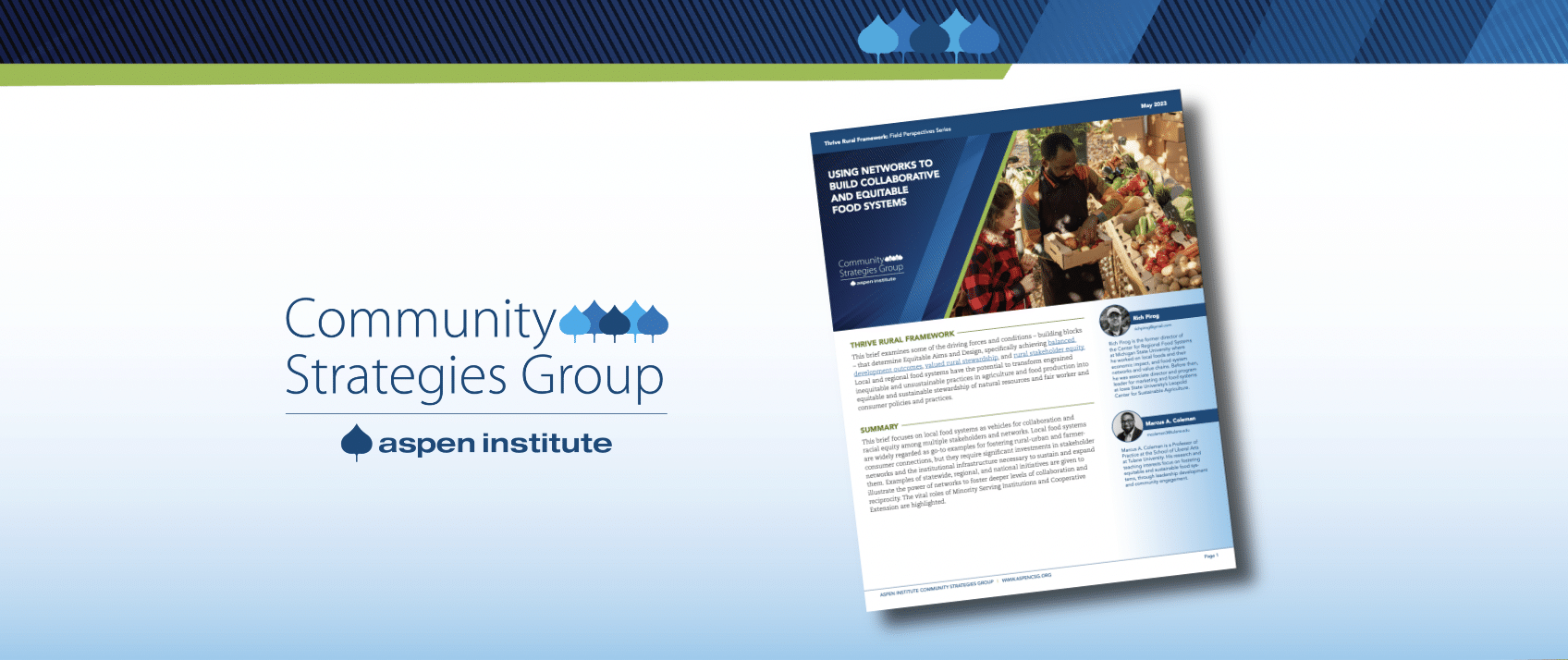
Using Networks To Build Collaborative & Equitable Food Systems
This brief focuses on local food systems as vehicles for collaboration and racial equity among multiple stakeholders and networks.
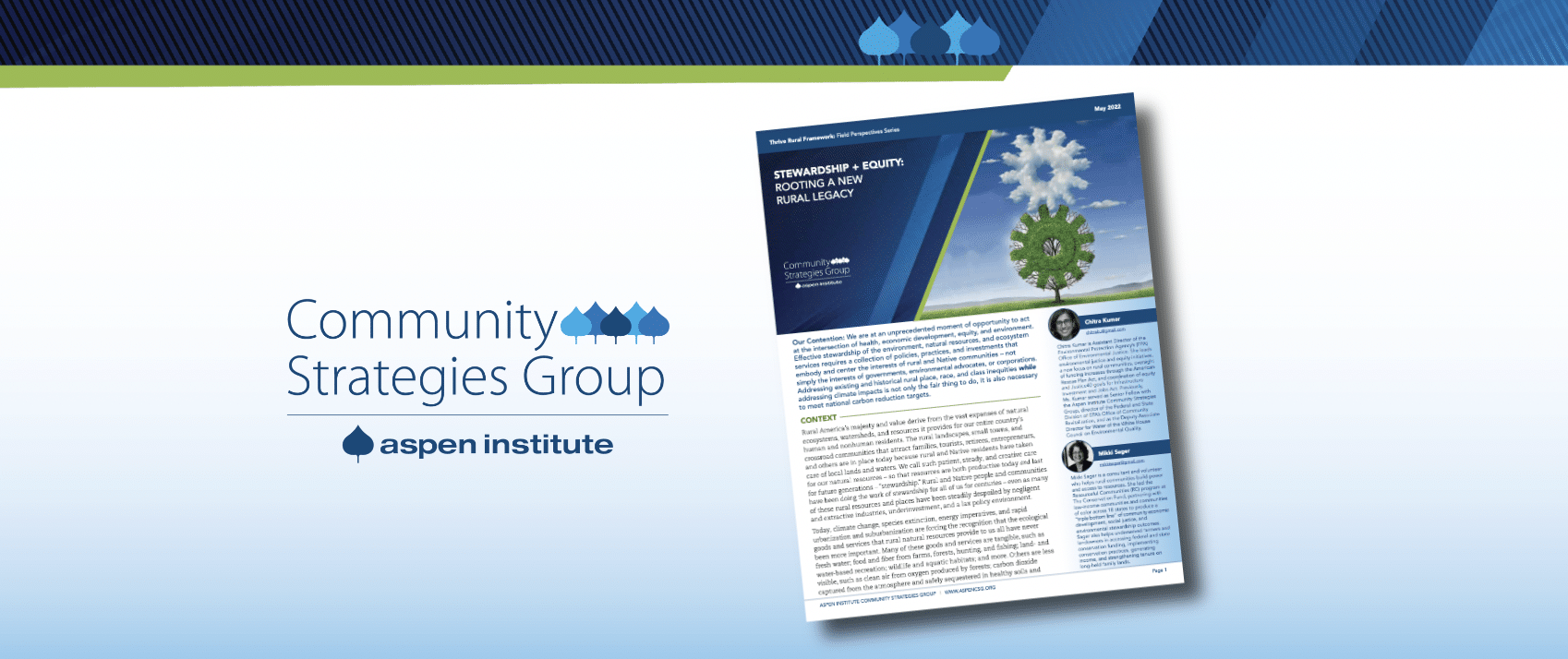
Stewardship + Equity: Rooting a New Rural Legacy
Rural and Native communities have been stewarding the land for generations. Many are developing new ways of growing nature and…
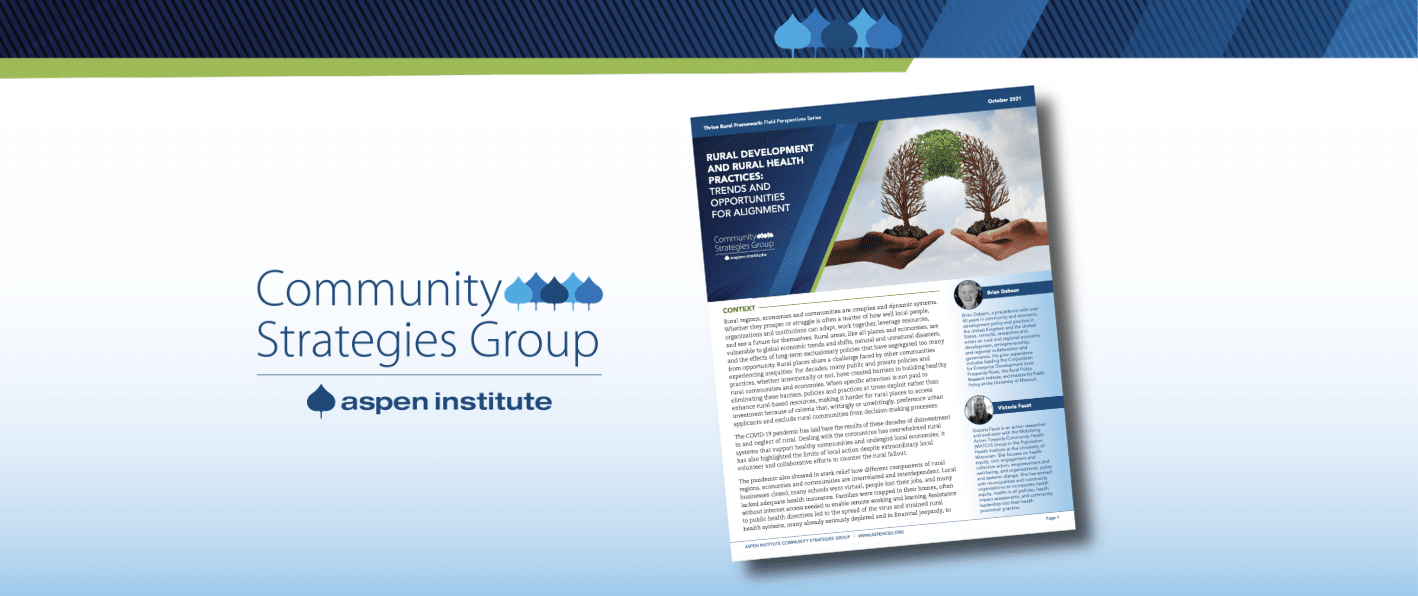
Rural Development & Health Alignment Opportunities
This first in the Thrive Rural Field Perspective Series describes the main trends and catalysts for change that emerged from…
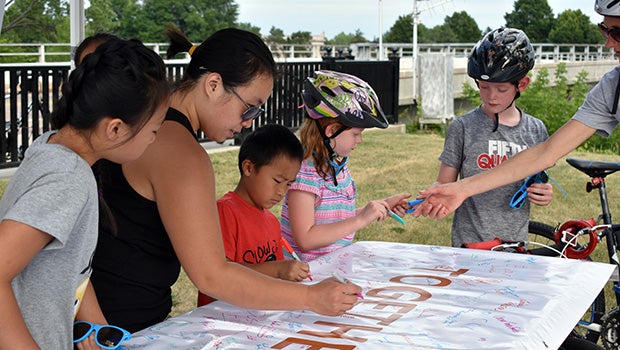
Place-Based Shareholder Engagement
Last week, the Business Roundtable, a powerhouse collective voice for business interests, released a new statement redefining corporate “purpose.” In it, they…
Native Nation Building: It Helps Rural America Thrive
Native nations and rural communities, working side-by-side and together, can strengthen the potential for thriving rural regions.
Rural Development Hubs: Strengthening America’s Rural Innovation Infrastructure
Rural Development Hubs are a specific set of intermediaries that are doing development differently in rural America. They are main players advancing an asset-based, wealth-building, approach to rural community and economic development.
Field Items

RESTORATION AND RENEWAL: THE NEW APPALACHIAN ECONOMY
Appalachian Voices
The Reclaiming Appalachia Coalition shares Just Transition case studies shedding light on Appalachia’s ongoing economic transition.
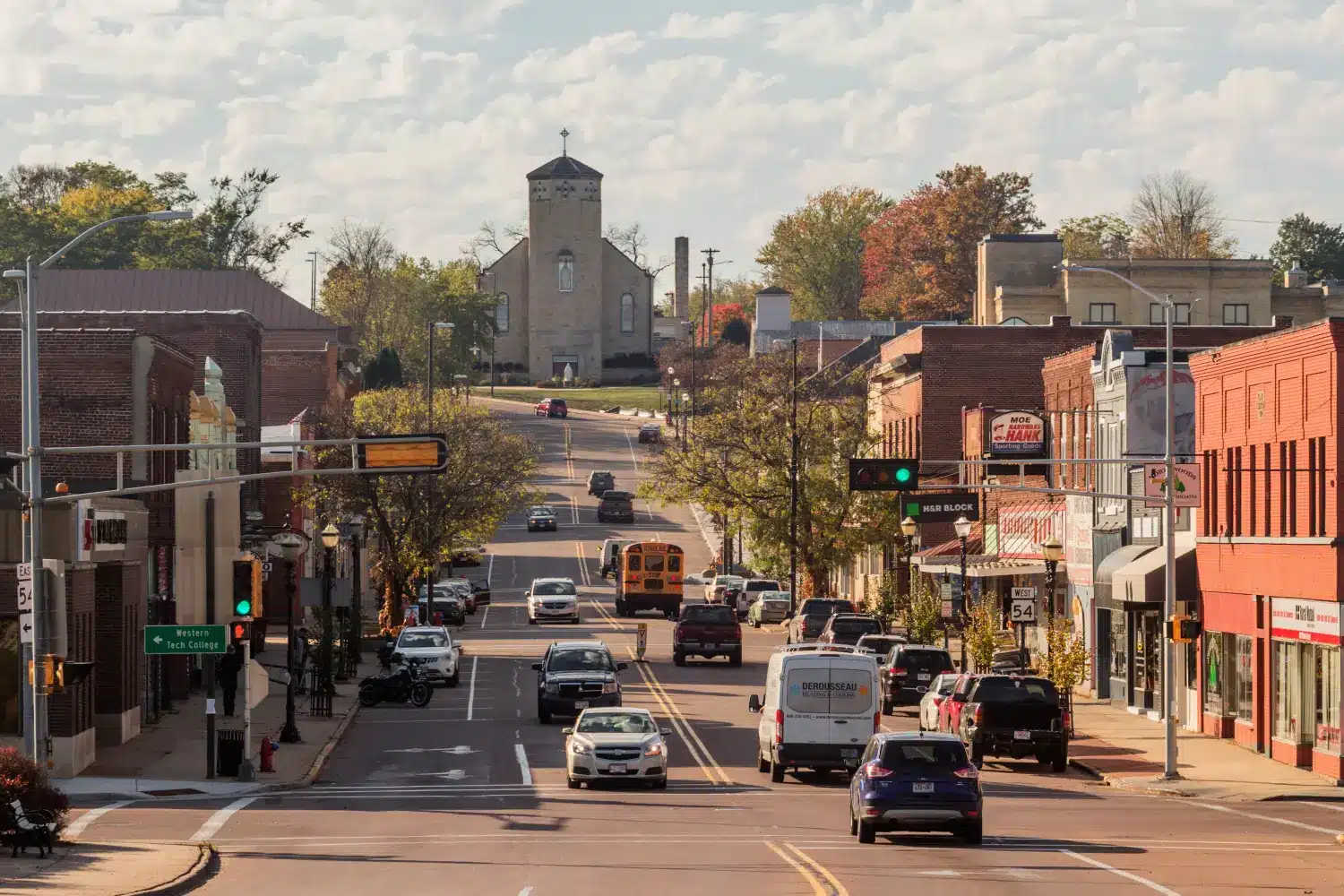
WHAT IS TRIPLE BOTTOM LINE?
Indiana Business Research Center
This article reviews the TBL concept, explains how it can be useful for businesses, policy-makers and economic development practitioners and highlights some current examples of putting the TBL into practice.

B-CORP PROGRAMS AND TOOLS
B Corps
Aspen CSG highlights B Lab’s Programs & Tools as a practical resource for businesses seeking to align profit with purpose….

The ABC’s of Cooperative Impact
NCBA CLUSA
Analysis of cooperatives in a number of different economic sectors.

COOPERATION WORKS SUCCESS STORIES
Cooperation Works
Stories of how co-ops keep income in the community, building wealth, creating jobs and reinvigorating economies.

CO-OPS: A KEY PART OF RURAL AMERICA
U.S. Department of Agriculture
The U.S. Department of Agriculture (USDA) highlights cooperatives as a cornerstone of rural America, where producer- and user-owned businesses help…

STAKEHOLDER ENGAGEMENT—A CHECKLIST FOR RURAL EDUCATION SYSTEMS
Office of Elementary & Secondary Education
A blog to help ensure their stakeholder engagement approaches are effective in rural districts.

REIMAGINE APPALACHIA COMMUNITY BENEFITS MATERIALS
ReImagine Appalachia
ReImagine Appalachia has gathered tools and resources on community benefit agreements that are useful for all rural communities.

RURAL STAKEHOLDER ENGAGEMENT
Rural SE Hub
A resource on rural stakeholder engagement from Scotland.
We see the framework as a living document, which necessarily must evolve over time, and we seek to expand the collective ownership of the Thrive Rural Framework among rural equity, opportunity, health, and prosperity ecosystem actors. Please share your insights with us about things the framework is missing or ways it should change.