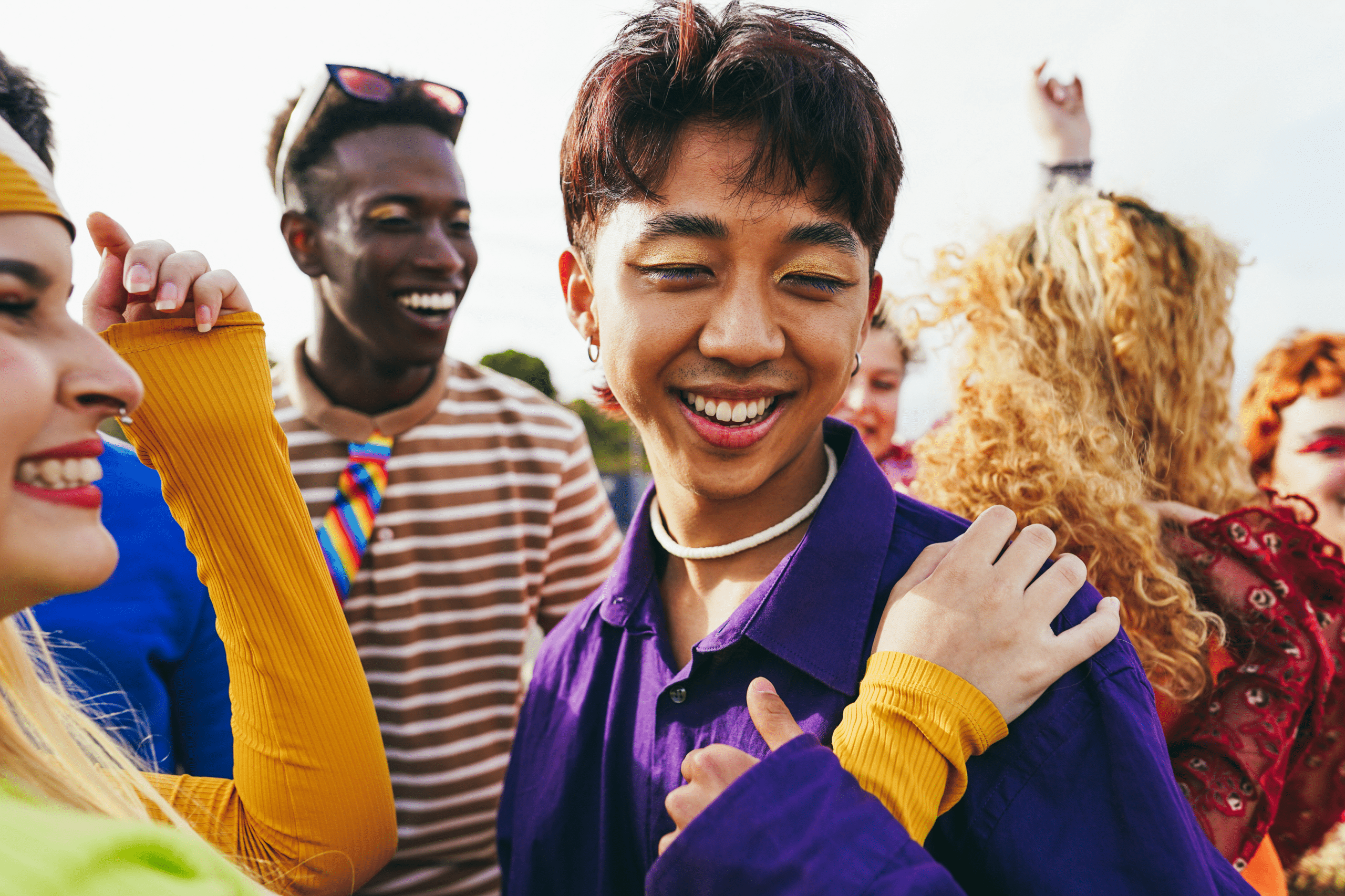
Between 2.9 and 3.8 million queer people live in rural areas. While queer people often face unique challenges in rural places, the close-knit nature of many small, rural communities often facilitates the uplifting and celebration of queer community members and organizations.
Family and community support have been proven to promote the physical and mental health of for LGBTQ+ youth, who often face greater health barriers than their non-LGBTQ+ counterparts. Student organizations such as a GSAs (Gender & Sexuality Alliances) or community pride celebrations are common ways to provide support to the queer community and celebrate the integral role queer people play in their communities.
Identifying and honoring the moments and places in which queer people are celebrated by their rural communities is an essential part of building an accurate rural narrative that encapsulates the diverse attitudes present throughout rural places. Organizations, governments, and people all throughout the rural United States and in Native nations work to ensure that all are welcomed to their communities.
Below are a few events and stories which highlight and celebrate LGBTQ+ people in rural communities and Native Nations.
- Read about the world’s first Queer Wine Festival, happening in Willamette Valley’s wine-growing region. Celebrating queer-owned wineries in Oregon, Washington, and California, the event is put together by Wine Country Pride, founded in 2020 by volunteers to bring Pride celebrations to rural Oregon. The organization’s president is Remy Drabkin, owner of Remy Wines. Remy is also McMinnville, Oregon’s interim mayor: the first woman and queer-identified person to hold that office.
- Catwalk Party: Celebrating Counter Culture in Rural Minnesota, is the first drag show in Fergus Falls, Minnesota. The show was received well by the community, and Dominic Facio, producer, director, and manager of the show, said in an interview,“Some people who have come to the shows … have mentioned you should go to LA or be in a metro area… The truth is that rural America needs what I’m doing.”
- With street fairs, fashion shows, and music festivals, Bastrop, Texas’ Pride festival works to celebrate and uplift the queer people of Bastrop, Texas. Founded in 2022, Bastrop Pride has also found support from other small towns in Central Texas, showing the power rural communities can have when they celebrate the LGBTQ+ community together.
- Bloomington, Indiana’s local lesbian bar, The Back Door, is a vital part of the town’s social life and community. The bar and club are open to everyone, and The Back Door’s manager, Cale Ulery, says the goal is to give people a place to feel safe and be authentic.
- This year marks 12 years since the Bay Area American Indian Two-Spirits organization (BAAITS) hosted its first annual Two-Spirit powwow, which was, at the time, the first and only public Two-Spirit powwow in the world. The team behind the first BAAITS Powwow sought to de-gender these traditions and bring Two-Spirit people together from nations across North and Central America. This year, while gearing up for its Two-Spirit powwow, BAAITS hosted a film festival, an Indigiqueer drag show, a youth and elder panel, and more.
- The Brown Door bar in Hammond, Louisiana, hosts Tuezgays, a weekly drag show for queer people to have a “place to celebrate who they are wholeheartedly.” Tuezgays was one of Hammond’s first advertised LGBTQ+ events, and its success has been realized as the event has become more and more popular in the community.
- The Navajo Nation Pride celebrations have been an opportunity for those in the nation to demonstrate their support for the lesbian, gay, bisexual, transgender, queer, and two-spirit community members. Navajo Nation Pride Executive Director Alray Nelson says his team is also proud to have grown to include representatives from other tribal nations.
- The University of Kentucky’s LGBTQ Agricultural and Environmental Sciences Fund, the first program of its kind in the region, awards scholarships to LGBTQ-identifying students at the University of Kentucky’s College of Agriculture, Food, and Environment. Seth Riker, steward of the fund, said to The Daily Yonder, “Speaking as a closeted kid who grew up on a rural Kentucky farm, I wanted to create the message I needed 20 years ago: you are not alone, and you belong here.”
This blog was written by Ava Partridge, Aspen CSG’s 2023 Summer Intern, and the entire Aspen CSG team contributed to its production.