The Aspen Institute Community Strategies Group (Aspen CSG) is a national organization focused on strengthening community and economic development in rural regions and Native nations across the United States.
Founded in 1985, we support practitioners and regional institutions navigating complex economic, social, and demographic change while pushing decision-makers to rethink rural project and funding strategies.
Our role is to connect people, surface shared challenges and strategies across places, and strengthen the systems that support long-term rural prosperity, equity, and well-being.
Our Purpose
Rural regions and Native nations are navigating major transitions. Economies are shifting. Workforces are changing. Climate pressures are increasing. Public and philanthropic funding systems continue to evolve. Many rural communities also carry the legacy of extractive policy and practice, where wealth has been generated from a place without long-term reinvestment in the people who live there. The shift from coal mines to data centers illustrates this pattern; industries change, but development can remain extractive if local ownership, voice, and long-term benefit are not built in.
These challenges also create opportunity. Rural regions hold natural assets, local leadership, and strong networks that can drive durable prosperity when systems are aligned and regional capacity is strong.
Our purpose is to help strengthen that capacity. We work to ensure rural communities and Native nations have the relationships, resources, and coordinated strategies needed to move beyond extractive models and build long-term economic well-being, where people can belong, participate, and thrive.
Our History

Founded in 1985, the Aspen Institute Community Strategies Group has worked alongside rural practitioners and regional organizations for more than four decades.
As rural conditions have shifted, our work has evolved with them, grounded in the experience and leadership of people doing the work on the ground.
This long-term engagement allows us to see patterns across places, understand what supports sustained progress, and adapt strategies as conditions change.
Our Role in the Field
We strengthen the rural development field by connecting leaders across regions, supporting peer learning, and grounding research in practitioner experience. We convene regional organizations, surface patterns across places, and help align strategies and resources to build long-term capacity.
We don’t provide direct services, make grants, or advocate for specific legislation. Instead, we serve as a trusted learning partner and convener, helping rural practitioners and regional leaders navigate change and strengthen locally driven development over time.
Values and Commitments
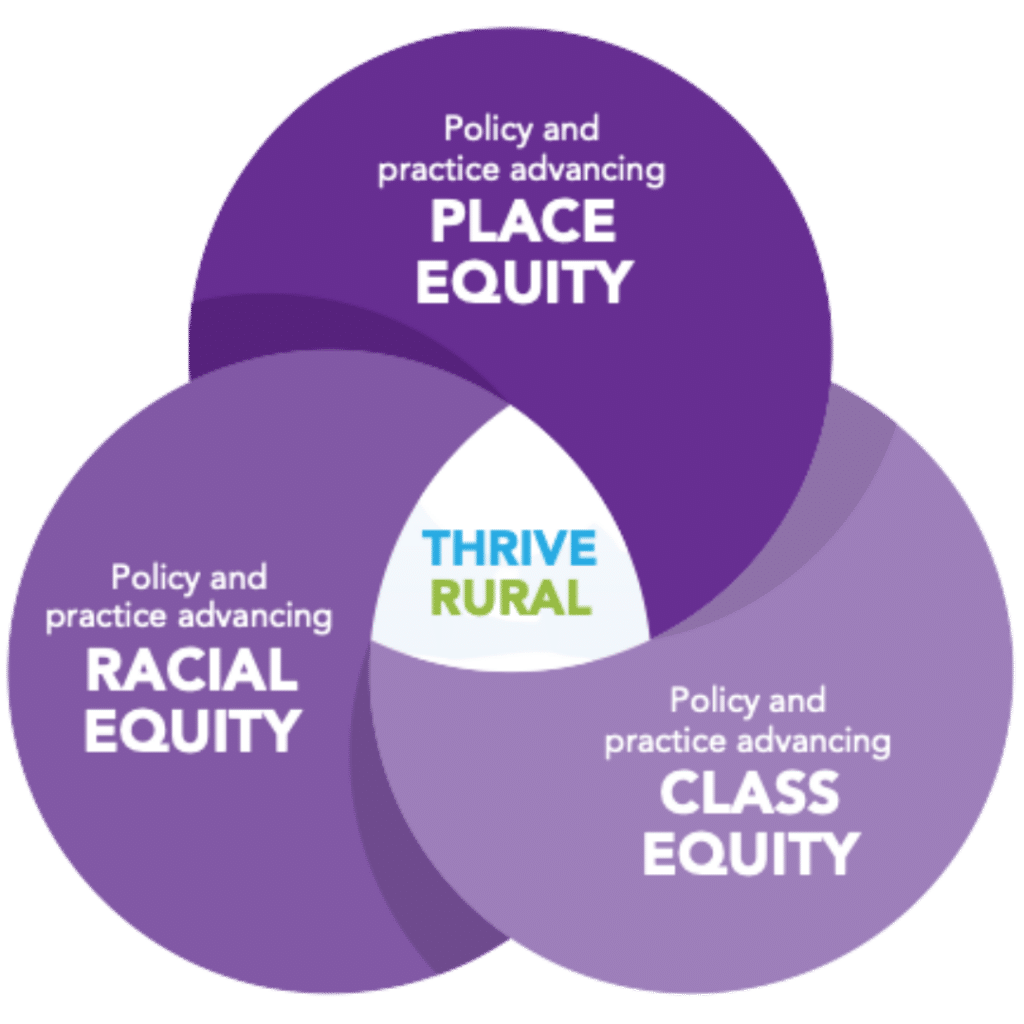
Our work is grounded in the Foundational Element of the Thrive Rural Framework. At both the local and systems levels, this means identifying and dismantling historical and ongoing practices that disadvantage rural people and places.
Exclusion in rural regions has often been shaped by place, race, and class. It can be embedded in policy language, funding criteria, regulatory design, common practices, and the composition of decision-making bodies. It shows up in where services are located, how funding is distributed, who can access capital, whose land and treaty rights are honored, and who is able to participate in leadership and civic life.
We prioritize practitioner leadership, respect local context, and focus on long-term regional capacity. Our goal is to strengthen systems so that rural communities and Native nations can shape their own futures and ensure each and every person has a fair opportunity to belong, participate, and thrive.
Institutional Home
Aspen CSG is a policy program of the Aspen Institute, a US-based 501(c)3 non-profit. Aspen CSG is self-funded and independently supported by our donors. Our work is currently and historically supported by: Ford Foundation, Annie E. Casey Foundation, Robert Wood Johnson Foundation.
Washington, DC Headquarters
The Aspen Institute is based in Washington, DC.
Aspen CSG staff live and work in the Washington, DC area, which is the unceded homeland of the Nacotchtank, Piscataway Conoy, and Pamunkey peoples and their descendants.
These sovereign nations have called the Washington, DC region home for tens of thousands of years. They have endured generations of genocide, enslavement, and displacement. And still they endure.
We hope that in advancing rural prosperity, we are doing so responsibly, with respect and recognition of the Indigenous peoples who have long stewarded this region and regions across the United States.
Aspen Meadows Campus
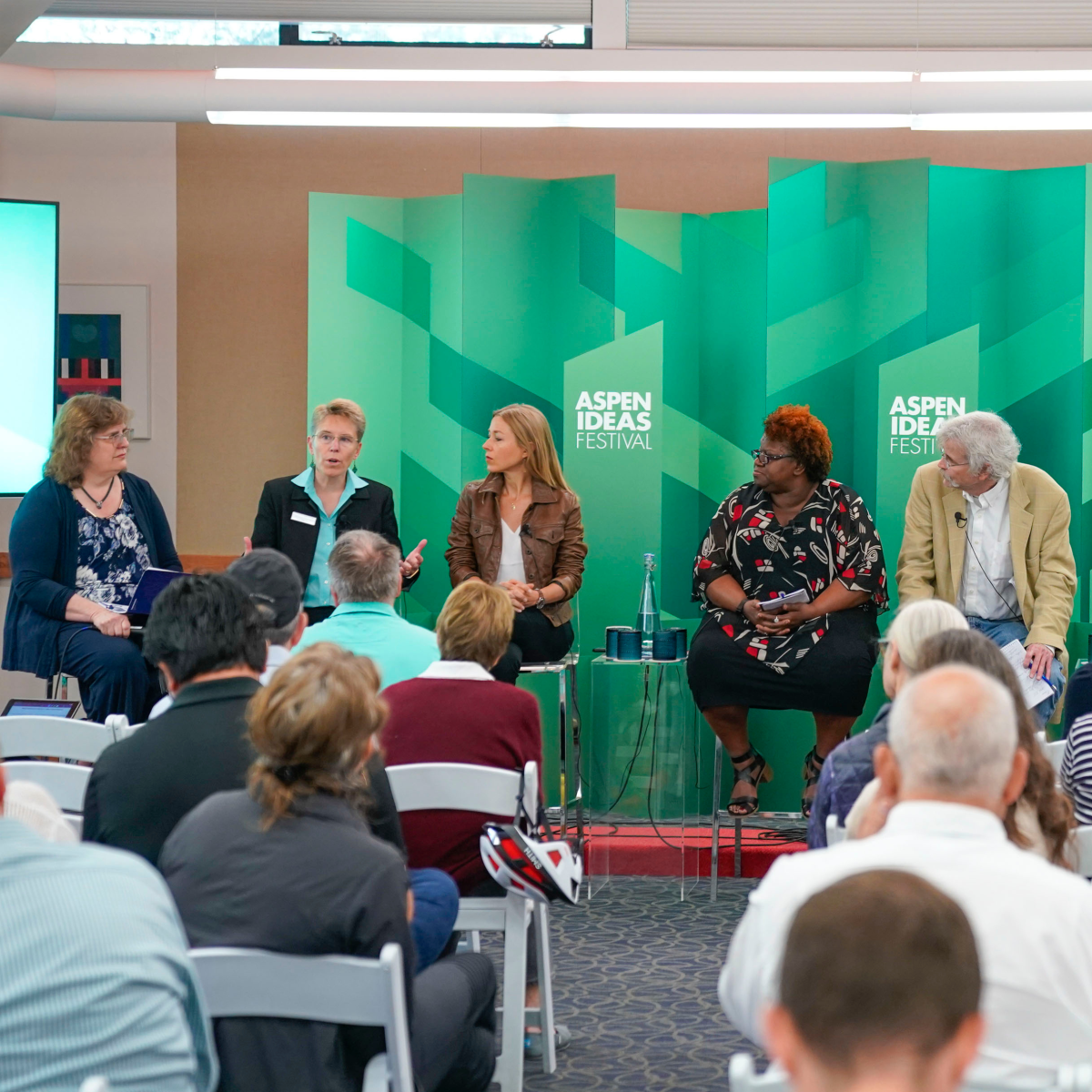
The Institute was founded in Aspen, Colorado, in 1949, with the Aspen Ideas Festival continuing to take place at the Aspen Meadows Campus.
The Institute acknowledges and honors the Ute Tribe and all Indigenous peoples on whose ancestral homelands we gather and work. The Institute invites all to reflect on the impacts of colonial settlement and displacement, to uncover truths about the lands we occupy, and most importantly, to celebrate Indigenous resiliency.